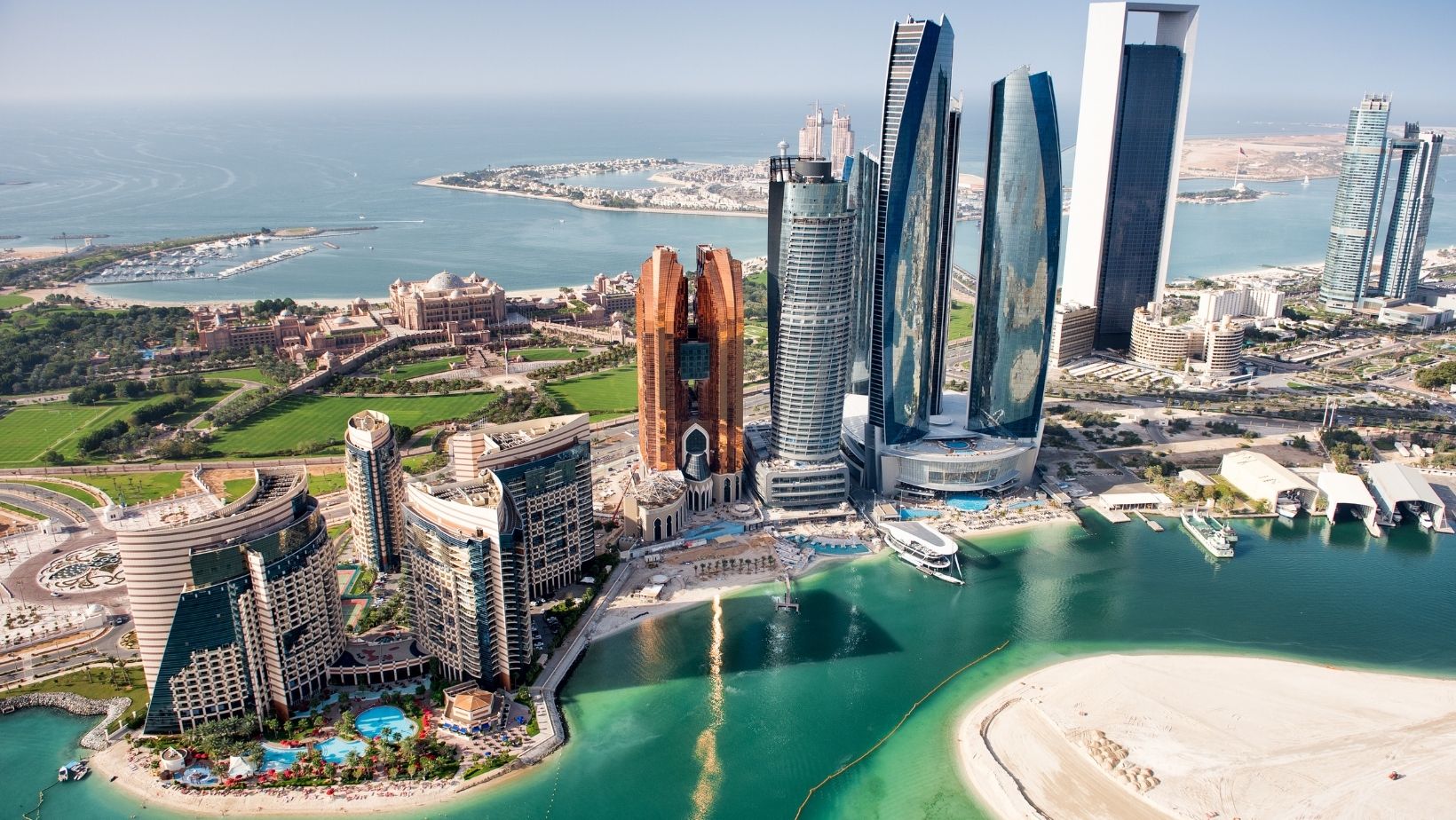
The Gulf Real Estate Story Hiding Behind Dubai
When American investors hear “real estate in the Gulf,” the next word is almost always Dubai. The skyline, the headlines, the record-breaking sales: Dubai has owned the conversation for a decade. But the quieter capital an hour up the coast has done something Dubai-watchers tend to miss. Over the past five years, villas in Abu Dhabi have posted a stronger run than the apartment market that usually gets the attention, and they have done it at entry prices that look modest next to their famous neighbor.
This is not a pitch for moving your portfolio to the desert. It is a look at why a corner of a market most US investors never consider has quietly become one of the more interesting value stories in global residential property, and where the case gets shakier once you read past the headline number.
A 42% Run Since 2020, and What the Headline Leaves Out
Here is the figure doing the work. According to Knight Frank’s H1 2025 Abu Dhabi Residential Market Rating, average villa prices in the emirate reached about AED 1,103 per square foot by mid-2025, roughly 42 percent higher than where they sat in the first quarter of 2020. Apartments rose over the same five-year window too, but by less, landing around 29 percent above their early-2020 level. Measured from the start of the pandemic to the middle of 2025, villas were the stronger performer.
That is the headline, and it is accurate. It is also where most write-ups stop, which is a mistake, because the most recent stretch tells a different story. Through 2025 the pattern flipped: apartment prices in Abu Dhabi climbed faster than villas on a year-over-year basis, with apartments up in the mid-thirties as a percentage and villas up in the low-to-mid teens by the close of the year.
Both things are true at once. Villas led the long game from 2020 to 2025. Apartments led the most recent lap. Rather than canceling the thesis, that split is the tell of a market with real depth: different segments moving on different clocks, pushed by supply, demand, and where buyers happen to be looking in a given quarter. It is the kind of nuance that separates a market worth studying from a hype cycle. Anyone who quotes the 42 percent figure without the asterisk is selling something. The investors worth listening to read both numbers and ask which one matches their time horizon.
Why Villas, and Why the Entry Price Is the Real Story
Strip away the price chart and the villa story is really a supply story. Abu Dhabi has not built villas at anything like the pace it has built apartments. Villas make up a little over a third of the emirate’s residential supply pipeline, and new villa launches have stayed limited while demand from families wanting space, privacy, and a yard has held firm since 2020. Scarce supply meeting steady demand is the oldest reason in real estate for prices to hold and climb.
Then there is the price gap, which is the part that tends to surprise people. At roughly AED 1,100 per square foot, Abu Dhabi villas trade at close to half the going rate for comparable villas in Dubai, where per-foot pricing often runs to double. Entry points exist across a wide band. A four-bedroom villa on Saadiyat Island, one of the premium addresses, starts in the AED 8.5 to 9.5 million range, while standalone family villas in established inland communities can begin closer to AED 4 million.
Averages only carry you so far, though. For readers who want to see how price tracks with community, plot size, and finish, it is worth scanning the current villas for sale in Abu Dhabi, from those inland family homes to beachfront estates. Real listings make the spread concrete in a way a single per-foot number never will.
The Diversification Case for a US Investor
For an American investor, the pull is less about a single price chart and more about owning something that behaves differently from everything else in the portfolio. A few features make Abu Dhabi villas worth a look as a diversification sleeve rather than a core holding.
Start with tax. The emirate levies no capital gains tax, no income tax, and no annual property tax on residential real estate. Compare that with a US rental, where rental income is taxed as it lands and a sale triggers capital gains on the way out. The drag those two taxes put on a US property’s net return simply is not there, and that alone changes the math on yield.
On yield itself, gross rental returns on Abu Dhabi villas commonly sit in the 6 to 8 percent range, ahead of what most US residential markets deliver after the recent run-up in American home prices. Currency is the other piece that tends to worry US investors looking abroad, and here Abu Dhabi removes most of the fear: the UAE dirham has been pegged to the US dollar for decades, so a dollar-based buyer is not stacking a bet on a volatile exchange rate on top of the property itself.
There is a residency angle too. Buyers who own property worth AED 2 million or more can qualify for a 10-year residency visa, and freehold ownership is open to foreign buyers in designated investment zones. None of this makes Abu Dhabi a sure thing. It makes it a different kind of exposure: a dollar-pegged, tax-light, yield-positive asset in a region most American portfolios touch in no other way.
The Risks and the Honest Caveats
The case has real holes, and pretending otherwise would be the fastest way to lose your trust. The first is liquidity. Abu Dhabi’s market is thinner and more end-user driven than Dubai’s, which means fewer buyers when you eventually want to sell and potentially longer to find them. Activity can cool quickly: residential sales in the first half of 2025 came in well below the same period a year earlier, held back by how little finished stock was available to trade.
Supply is the second caution, and it cuts the other way over time. More than 33,000 homes are under construction across the emirate and due by the end of the decade. A wave of new inventory is healthy for a market, but it can also soften the very price growth that makes the villa story attractive in the first place.
The rest are practical. Foreign ownership is limited to designated freehold zones, so where you can buy is narrower than the full map suggests. This is a long-hold asset, not a property to flip in eighteen months. And owning from the other side of the world means dealing with distance, property management, and the friction of moving money between countries, even with the dollar peg in place. If any of those are dealbreakers, this is not your trade.
Where This Fits, and How to Actually Look
Treat Abu Dhabi villas as a watchlist idea, not a directive. If the diversification logic lands and the risks do not scare you off, the smartest first move is information, not a deposit. Get familiar with the freehold zones where foreign buyers can actually purchase: Saadiyat Island and Al Raha Beach at the beachfront end, Yas Island for master-planned community living, and Al Reef for more affordable entry points. Spend time reading real listings to calibrate what your budget buys before you so much as email an agent.
None of this is financial advice, and a single strong market run is not a forecast. But for a US investor quietly looking for exposure that does not move in lockstep with the S&P or the local housing market, the capital next to Dubai has earned a place on the list worth watching.
About The Author