Most expensive home repairs do not start with major disasters. They usually begin with small warning signs that seem harmless at first.
After spending time around homeowners in Alpharetta and nearby communities like Johns Creek, Milton, and Roswell, one pattern becomes obvious. People get busy. Between work schedules, family responsibilities, school activities, and everyday life, routine maintenance often moves to the bottom of the list.
Unfortunately, North Georgia weather rarely gives homeowners much room for neglect. Humid summers, frequent rain, seasonal storms, and expanding clay soil all create conditions that quietly wear down homes over time.
I have seen homeowners discover foundation moisture after ignoring overflowing gutters. Others only realize something is wrong after noticing higher utility bills or unexpected appliance failures.
Many of these situations could have been avoided with small routine checks throughout the year.
This guide covers common maintenance mistakes Alpharetta homeowners make and practical ways to stay ahead of them.
Key Takeaways
- Clean gutters twice each year to prevent drainage issues.
- Georgia’s humidity places heavy stress on HVAC systems.
- Appliance maintenance often gets overlooked until performance declines.
- Roof damage after storms can worsen if ignored.
- Small plumbing problems often become expensive repairs.
- Seasonal maintenance prevents many avoidable home expenses.
Mistake #1: Waiting Until Gutters Overflow
One of the most common issues homeowners overlook starts at the roofline.
Last spring, a homeowner near Johns Creek noticed mulch washing away near the foundation after heavy rain. At first, it seemed like a landscaping problem. The actual issue turned out to be clogged gutters overflowing behind sections of fascia.
Water had been spilling in the same area for months.
Alpharetta receives significant rainfall throughout the spring and summer. When gutters clog, the water does not simply fall onto the ground.
It can lead to:
- Foundation moisture problems
- Soil erosion
- Wood rot
- Mold growth inside walls
- Damaged fascia boards
Quick warning signs
- Water spilling over gutter edges
- Sagging sections
- Pools of water near the foundation
- Plants growing from gutters
What to do
- Clean gutters in late fall after leaves drop
- Clean them again in early spring
- Keep downspouts at least six feet from the home
- Inspect gutters after heavy storms
Mistake #2: Ignoring HVAC Maintenance During Georgia Summers
HVAC systems in Alpharetta often work harder than many homeowners realize.
Summer temperatures combined with humidity can keep systems running for long stretches between late spring and early fall.
A common situation homeowners notice starts with uneven temperatures.
Maybe the upstairs feels warmer than the rest of the house. Maybe energy bills slowly increase. Sometimes airflow simply feels weaker than usual.
Often, the problem is something simple.
Dirty filters and neglected maintenance force systems to work harder than necessary.
Common signs of trouble
- Higher utility bills
- Weak airflow
- Rooms cooling unevenly
- Constant system cycling
What to do
- Replace filters every 60 to 90 days
- Replace them monthly if pets live in the home
- Schedule seasonal tune-ups in spring and fall
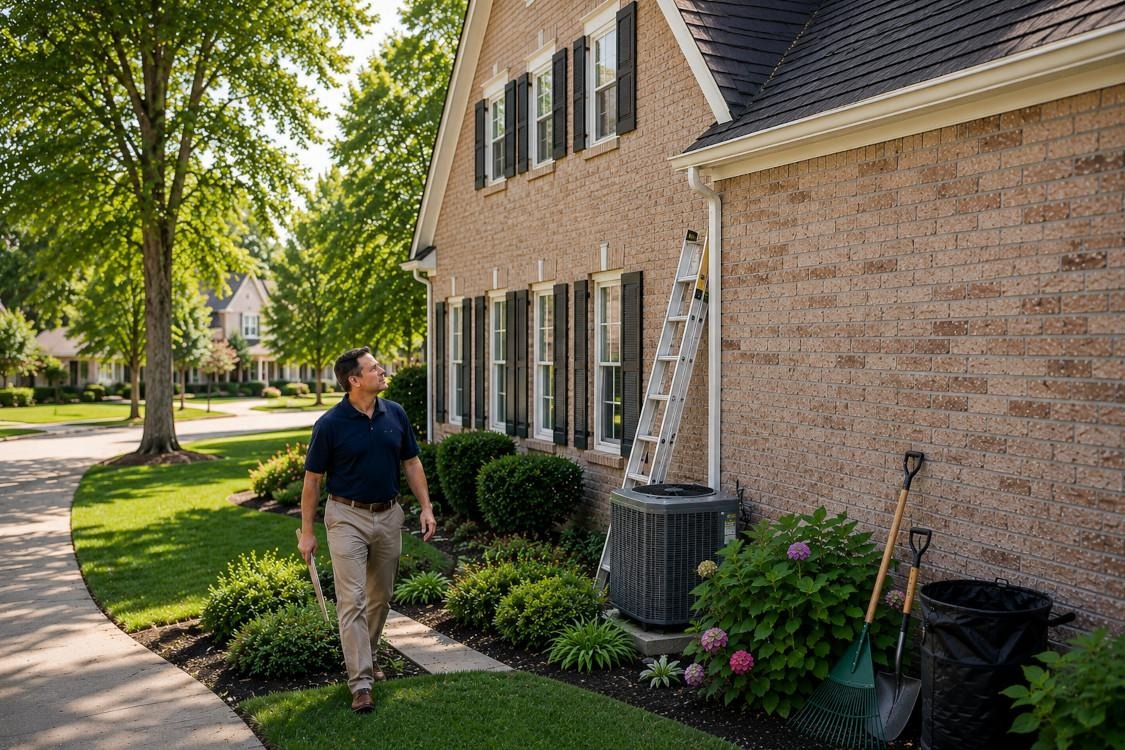
- Keep outdoor units clear of leaves and debris
Homeowner tip
If your HVAC seems to run constantly even at moderate temperatures, schedule an inspection before the summer heat peaks.
Mistake #3: Overlooking Appliance Maintenance
Many homeowners focus on roofing, plumbing, and HVAC systems while forgetting about appliances. While basic upkeep like cleaning filters and vents can help extend appliance life, recurring performance issues may require professional appliance repair in Alpharetta before small problems become more expensive breakdowns.
Small maintenance tasks often make a surprising difference.
For example:
- Dryer vents packed with lint increase fire risk
- Refrigerator coils covered with dust reduce efficiency
- Dirty dishwasher filters create additional strain
These issues often develop slowly enough that homeowners never notice performance changing.
Simple maintenance habits that help
- Clean dryer vents annually
- Vacuum refrigerator coils every six months
- Run dishwasher cleaning cycles monthly
- Pay attention to unusual sounds
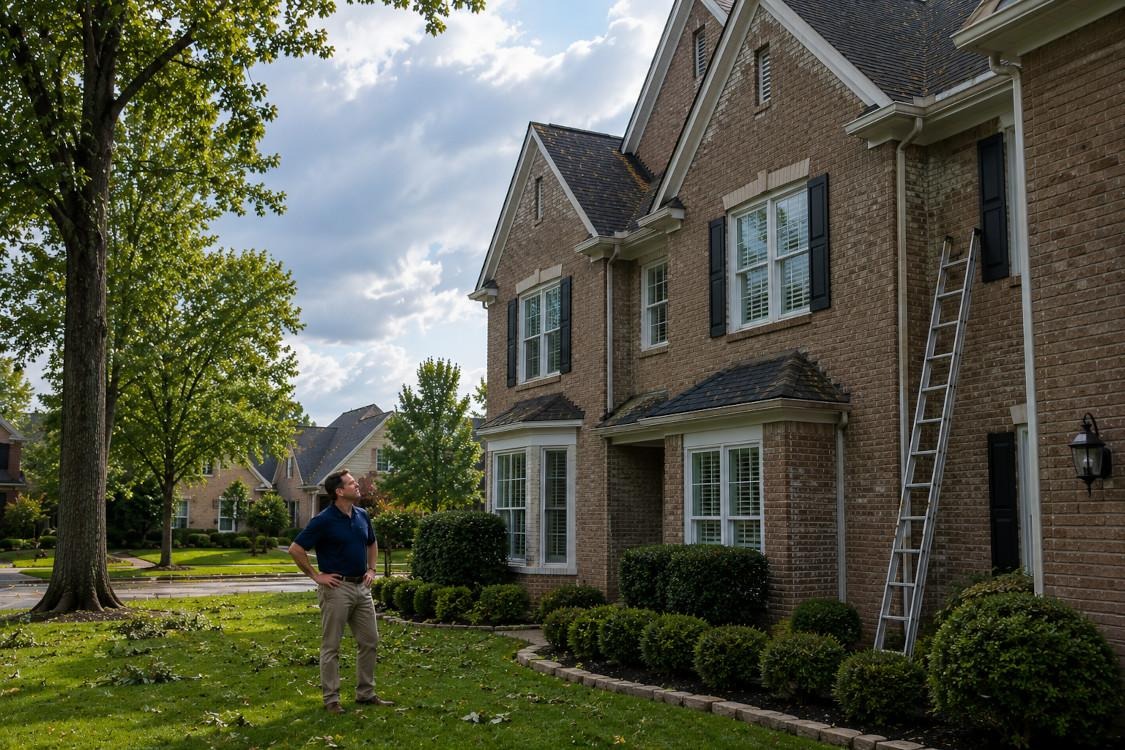
Alt text: Homeowner standing in the front yard of a suburban Alpharetta home after a storm, looking up at the roof and gutters from ground level while inspecting for possible damage.
Mistake #4: Assuming the Roof Survived Storm Season
Alpharetta experiences heavy rain, strong winds, hail, and occasional severe weather alerts throughout the year.
Many homeowners only think about their roof after they see visible leaks inside the house.
The problem is that roof damage often begins long before that point.
Things to watch for include:
- Missing shingles
- Cracked shingles
- Granule buildup in gutters
- Damaged flashing
Even minor damage can eventually allow moisture inside.
What to do
- Perform visual inspections from the ground
- Check the attic for moisture or staining
- Schedule professional inspections every few years
- Inspect after severe storms
Mistake #5: Ignoring Small Plumbing Warnings
Slow drains and running toilets rarely feel urgent.
That is exactly why they become expensive.
Small plumbing problems often provide early signals that something larger may be developing behind walls or under floors. Homeowners who ignore these subtle changes sometimes miss early moisture issues that spread unnoticed. Learning the early warning signs of hidden water damage every homeowner should know can help prevent larger structural and mold-related problems.
Watch for these warning signs
- Water pressure changes
- Slow drains
- Unusual water heater sounds
- Moisture around fixtures
- Higher water bills
What to do
- Fix running toilets quickly
- Flush the water heater annually
- Know where your shutoff valve is located
- Address recurring drainage issues early
Mistake #6: Forgetting About Caulking and Weatherstripping
This issue develops gradually, which makes it easy to miss.
Georgia’s heat, humidity, and changing temperatures slowly wear down protective seals around doors and windows.
Once deterioration starts, homeowners may notice:
- Drafts
- Moisture intrusion
- Pest activity
- Higher cooling costs
What to do
- Inspect caulking every year
- Replace damaged weatherstripping
- Use exterior materials rated for changing temperatures
Seasonal Home Maintenance Checklist for Alpharetta Homeowners
Spring
- Clean gutters
- Schedule HVAC maintenance
- Inspect roof conditions
- Check foundation drainage
Summer
- Clean refrigerator coils
- Remove debris around outdoor HVAC units
- Inspect exterior seals
Fall
- Clean gutters again
- Schedule heating inspections
- Check weatherstripping
Winter
- Inspect plumbing
- Test shutoff valves
- Check attic insulation
Why Alpharetta Homes Face Unique Maintenance Challenges
Local conditions matter.
North Fulton County homes face a combination of factors that homeowners in many other regions may not experience to the same extent.
These include:
- Humid summers
- Frequent rainstorms
- Clay-heavy soil
- Seasonal temperature fluctuations
Communities around Windward, Crabapple, and Downtown Alpharetta commonly experience:
- Soil movement
- Foundation stress
- Moisture retention
- Increased HVAC demand
- Faster deterioration of exterior materials
Generic home maintenance advice often misses these local factors.
Frequently Asked Questions
How often should homeowners schedule professional inspections?
A full inspection every three to five years is a good starting point, although severe weather or visible issues may justify additional inspections.
Which maintenance issue becomes most expensive?
Water damage often results in the highest repair costs because it can affect roofing, foundations, drywall, and structural components.
Should homeowners handle maintenance themselves?
Basic tasks like filter changes and appliance cleaning are often manageable. Roofing work, electrical repairs, and major plumbing projects are usually safer for professionals.
How does Georgia’s humidity affect homes?
Humidity increases the risk of mold, affects wood expansion, stresses HVAC systems, and accelerates the deterioration of exterior materials.
Small Maintenance Habits Make a Big Difference
Home maintenance does not have to become overwhelming.
Homeowners who avoid major repair surprises are usually not doing anything extraordinary. They simply build small habits into their routines and address problems before they become larger issues.
For Alpharetta homeowners, paying attention to drainage, humidity, seasonal weather, and routine inspections can make a significant difference over time.
A few hours of maintenance each season can prevent thousands of dollars in future repairs.
About The Author