Meteorological projections point to a strong El Niño-led summer in 2026, bringing intense and prolonged heatwaves across multiple regions. Temperatures are expected to stay well above normal throughout peak season, and that spells real trouble for property owners trying to keep homes safe and livable.
Global infrastructure is already feeling the pressure. Cooling demand is projected to more than triple by 2050 under current economic trajectories. And the affordability problem isn’t hypothetical: in 2023, 14% of Canadian households reported keeping their homes at unsafe temperatures because they couldn’t afford to run their cooling systems. So what’s the move? You need a clear plan that combines low-tech passive strategies with high-efficiency active cooling.
What the 2026 Summer Heat Actually Means for Your Wallet
This isn’t just a weather event. The 2026 heatwave will strain residential energy grids and test home infrastructure in ways most people aren’t ready for. Financial analysts expect the intense heat to accelerate demand for cooling appliances, impacting consumer markets and utility bills alike.
If you’re running outdated equipment, you’ll face the steepest financial penalties when electricity rates peak.
Regional dependency on mechanical cooling is already sky-high. As of 2025, 83% of Ontario households rely on air conditioning, the highest rate in Canada. The heat intensity expected in 2026 will drive a jump in demand for HVAC upgrades and replacement units. Homeowners who take a hard look at their insulation and HVAC capabilities now will protect themselves against both extreme temperatures and brutal utility rates later.
Passive Cooling: Your First Line of Defense
Before you crank the AC, there are practical, low-tech steps you can take to bring your home’s baseline temperature down. But let’s be realistic: urban planning experts point out that active and passive cooling need to work together as urban temperatures keep climbing. Passive strategies alone won’t cut it during a severe heatwave.
Natural cooling takes structural foresight. That often means designing indoor and outdoor spaces that manipulate airflow and block solar radiation. Environmental assessments confirm that tree canopies and green roofs noticeably lower localized temperatures before the heat even reaches your walls.
Here are three passive tactics worth prioritizing:
- Cross-ventilation: Open windows on the exit side of your home, especially high ones, to let rising warm air escape efficiently.
- Thermostat tweaks: Setting your thermostat just two degrees higher and running ceiling fans counterclockwise can cut AC costs by 14 percent.
- Architectural shading: Tree canopies, green roofs, and window awnings block direct solar heat gain before it gets through the glass.
When Passive Isn’t Enough: The Case for High-Efficiency HVAC
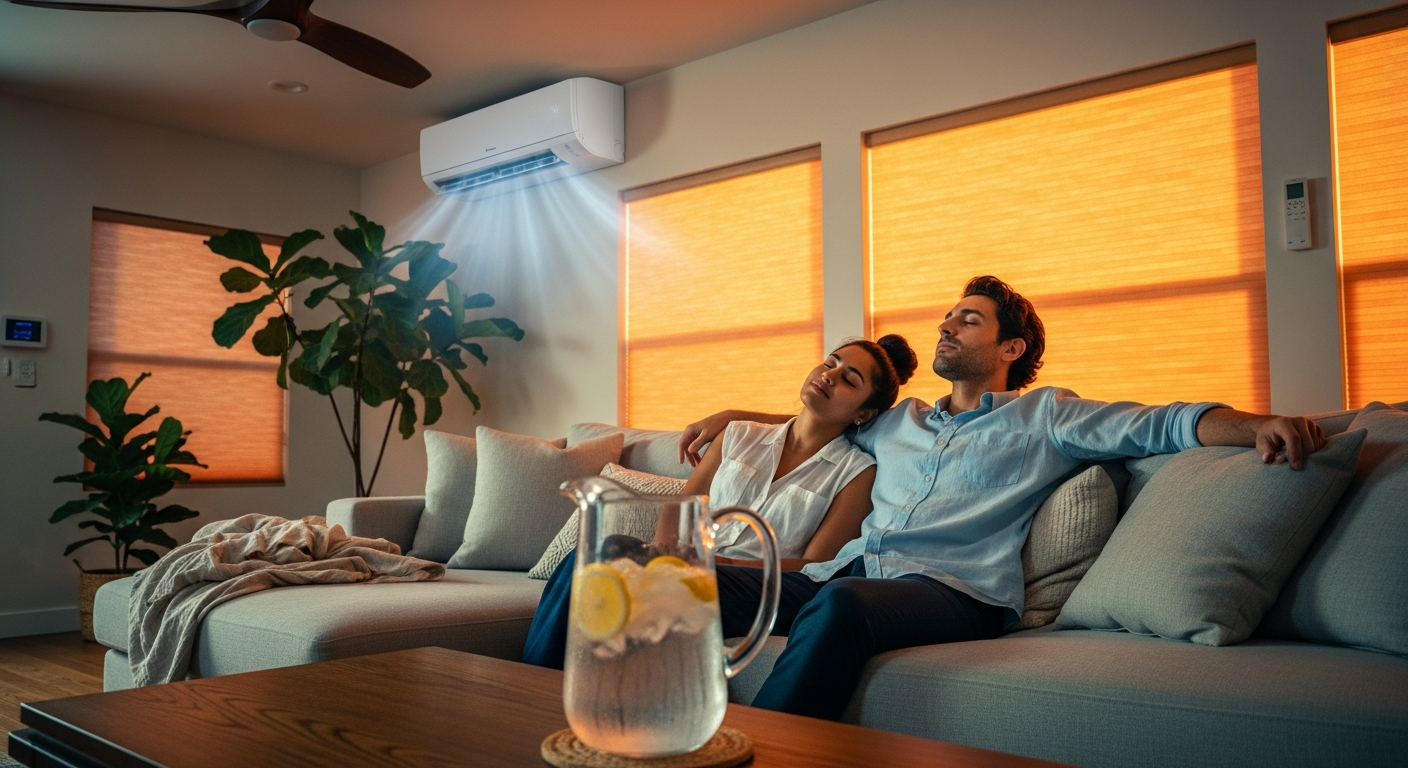
During a severe heatwave, open windows and ceiling fans simply can’t keep up. A well-maintained, high-efficiency air conditioning unit becomes your primary safety net. The market reflects this shift: an ENERGY STAR certified room AC uses 23% less energy than standard models, which adds up fast when your system runs all day.
Heat pump technology is gaining serious ground, too. Record numbers of households are adopting heat pumps to lower their energy bills. Industry data shows a massive expansion as electrification companies replace older units with modern, duct-compatible alternatives.
And the financial incentives? They’re real. Ontario homeowners can get rebates of up to 12,000 for installing cold-climate air source heat pumps. Upgrading before peak demand hits means better pricing and immediate efficiency gains.
The comparison below highlights how these strategies stack up:
| Strategy type | Initial investment | Energy cost impact | Heatwave reliability |
| Passive ventilation | Low to minimal | High savings | Low (fails in extreme heat) |
| High-efficiency AC unit | Moderate | Moderate savings (10% less than standard) | High |
| Modern heat pump | High (offset by rebates) | Maximum savings | Very high |
Don’t Skip Professional Maintenance
Even top-tier HVAC hardware will let you down without proper installation and routine upkeep. Strict maintenance routines can reduce energy bills by up to 20%. That kind of savings is a big deal, and it explains why the Canadian HVAC maintenance sector generated USD 1,708.9 million in 2024.
For Ontario homeowners, partnering with capable regional experts is the surest way to avoid a mid-summer breakdown. Residents in the London area can access professional AC services in London through LG Home Comfort, a family-owned business offering everything from high-efficiency central air and ductless installations to 24/7 emergency repair. With 83% of Ontario households depending on functional air conditioning, having a reliable local partner isn’t a luxury; it’s a necessity.
LG Home Comfort also focuses on indoor air quality, not just temperature control. Their certified technicians handle air purification and professional duct cleaning, which keeps homes cool and free of summer allergens. Plus, they offer free in-home assessments and same-day services, so you’re not left scrambling when a heatwave hits and your system gives out.
Building Long-Term Climate Resilience
Surviving the 2026 heatwave takes a dual approach: smart passive habits paired with robust HVAC infrastructure. Municipalities are working to expand heat response plans and cooling centers, but the responsibility for your indoor environment ultimately falls on you.
Audit your cooling systems now. Schedule preventative maintenance. Lock in high-efficiency upgrades before peak heat arrives. Taking action today strengthens your heat resilience, protecting your family’s health and keeping utility costs from spiraling when summer peaks.
About The Author