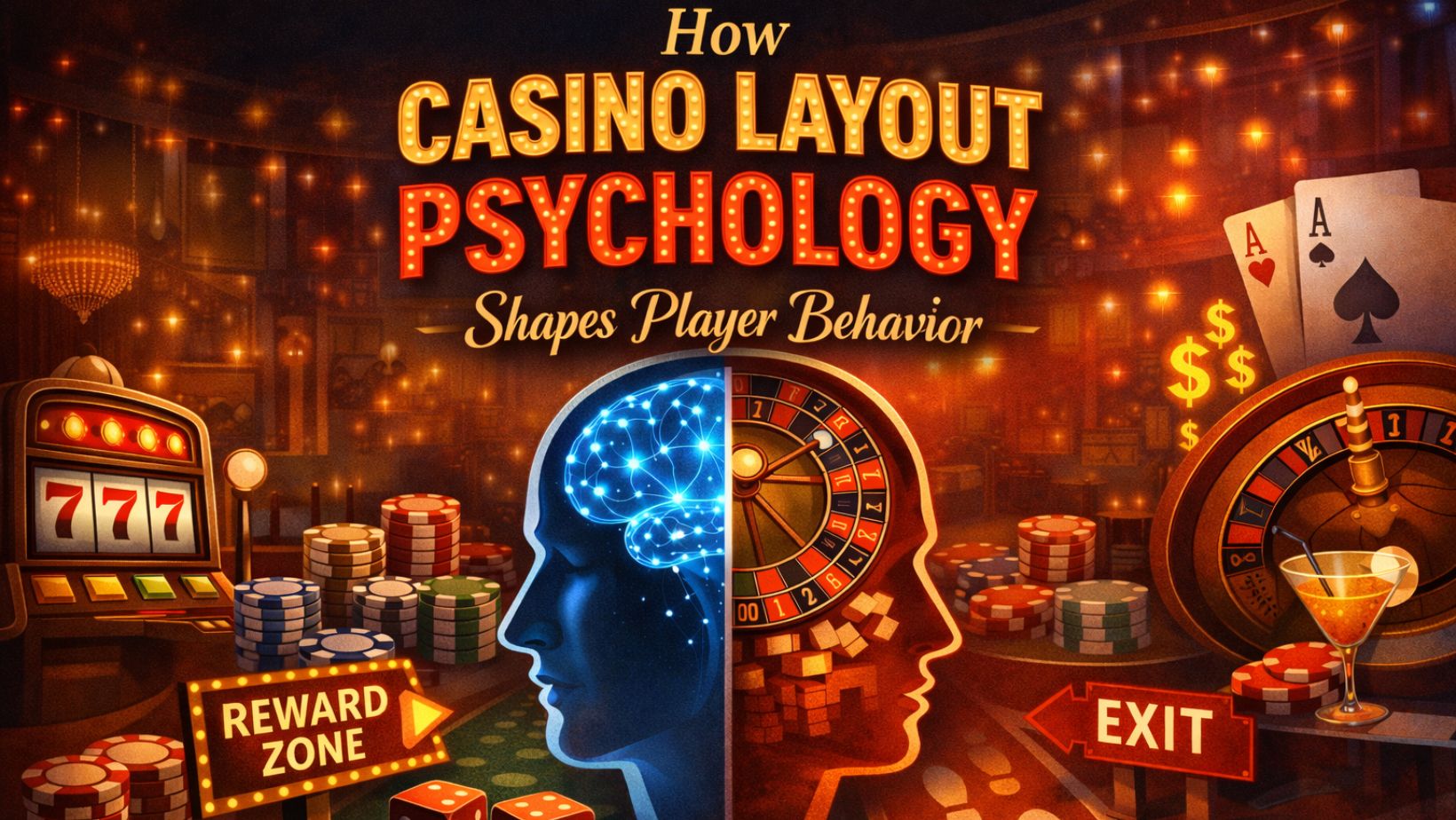
Have you ever walked into a casino and felt detached from the outside world within minutes? The lighting shifts your perception, the ambient noise fills cognitive space, and suddenly the outside clock no longer feels relevant. This sensation is not accidental. Casino environments are engineered ecosystems built on behavioral psychology, spatial economics, and decision science.
Every design element, from ceiling height to carpet pattern density, is calibrated to influence how long you stay, how comfortable you feel, and how frequently you engage with games. The objective is not coercion. It is friction reduction. The easier it feels to remain, the longer you remain.
The Maze Layout and Spatial Disorientation Effect
Traditional casino architecture often follows a labyrinth model. Straight sightlines are limited. Exits are visually obscured. Pathways curve rather than extend linearly. This design reduces immediate spatial orientation and subtly increases exploratory movement.
When individuals cannot instantly map their surroundings, they rely on environmental cues rather than directional goals. In a casino setting, those cues are gaming tables, illuminated slot banks, and promotional signage. The result is increased exposure to gambling opportunities.
Environmental psychologists frequently reference a phenomenon similar to the retail “Gruen transfer,” where consumers lose track of their original intent within immersive commercial environments. In casinos, that immersion increases dwell time and decreases the cognitive trigger to exit.
Understanding how immersion interacts with decision-making also requires awareness of broader casino game rules and mechanics. When players operate within a highly absorbing environment, even small lapses in strategic focus can influence wagering patterns and risk tolerance.
Casinos reinforce this spatial immersion by placing amenities, including restrooms, restaurants, and cashier desks, toward interior zones. Movement toward basic needs requires traversing the gaming floor again, multiplying exposure frequency.
Lighting and Sound as Behavioral Stimuli
Lighting inside casinos operates on contrast psychology. Ambient lighting remains warm and dim, creating intimacy and containment. Against this subdued background, slot machines and digital displays emit high-intensity colors and animated sequences.
This contrast drives visual fixation. Bright stimuli activate attentional capture mechanisms in the brain, increasing engagement with gaming devices.
Sound design amplifies this effect. Continuous background chatter blends with slot chimes and intermittent jackpot signals. These audio cues are not random. They create a perception of frequent winning events, even if actual payout distribution follows strict mathematical probabilities.
Research in behavioral reinforcement suggests that intermittent reward signals are more compelling than predictable ones. The auditory celebration of wins, whether yours or someone else’s, reinforces continued participation.
The removal of clocks and natural light completes the immersion cycle. Without temporal reference points, players experience time compression. Hours can feel significantly shorter than they objectively are.
Color Theory and Emotional Activation
Color selection inside casinos is strategic rather than decorative. Reds stimulate physiological arousal and increase heart rate. Gold tones evoke wealth and aspiration. Deep purples and blues signal luxury and exclusivity.
These colors operate at a subconscious level. They do not command action, but they create emotional priming. In heightened arousal states, individuals demonstrate increased risk tolerance and reward-seeking behavior.
Carpet patterns are equally intentional. Swirling, high-contrast designs reduce visual fatigue while directing peripheral vision toward brighter gaming areas. The floor itself becomes a subtle navigational guide.
This combination of color stimulation and pattern density prevents environmental dullness, maintaining sensory engagement across extended sessions.
Ergonomics and Physical Comfort as Retention Tools
Comfort engineering is one of the most underestimated components of casino psychology. Chairs at slot machines and table games are designed for prolonged sitting. Lumbar support, cushioning density, and optimal seat height reduce physical strain.
When discomfort signals are minimized, fewer natural breaks occur. A player who does not feel physically fatigued is less likely to interrupt play voluntarily.
Temperature also plays a role. Casinos often maintain slightly cooler indoor climates. Mild coolness promotes alertness without causing discomfort, sustaining attention for longer durations.
Together, ergonomic seating, temperature regulation, and consistent lighting create a low-friction engagement environment.
The Evolution Toward Open and Experiential Design
While traditional casinos emphasized maze-like confinement, modern casino resorts increasingly adopt open architectural concepts. Higher ceilings, broader pathways, and luxury aesthetics replace overt labyrinth structures.
This shift reflects updated behavioral insight. Rather than subtle disorientation, newer designs prioritize emotional comfort and aspirational ambiance. A guest who feels relaxed and sophisticated may stay longer voluntarily.
The psychological objective remains unchanged. Increase dwell time. Sustain engagement. Reduce exit triggers. The mechanism has evolved from spatial containment to experiential attraction.
Decision Fatigue and Cognitive Load Management
Another layer of casino design involves managing cognitive load. Clear signage for games, consistent chip colors, and standardized table layouts reduce mental friction. The fewer cognitive resources required to understand surroundings, the more available attention can be directed toward gameplay.
This reduction in decision fatigue lowers the barrier to continued participation. When the environment feels intuitive, disengagement requires conscious effort rather than natural exhaustion.
In this sense, casino design does not merely influence emotion. It shapes cognitive bandwidth allocation.
Frequently Asked Questions
Why do casinos avoid natural light and clocks?
Removing time cues disrupts natural circadian awareness and encourages immersion. Without temporal anchors, players underestimate session length.
Does layout design measurably affect gambling duration?
Yes. Studies in environmental psychology show that spatial complexity and limited exit visibility increase exploratory behavior and dwell time.
Are modern open-plan casinos less behaviorally engineered?
No. The strategy has shifted from subtle confinement to experiential comfort, but the objective of sustained engagement remains consistent.
Can understanding casino psychology improve self-control?
Yes. Awareness increases metacognitive regulation. Recognizing environmental influence allows players to establish structured limits on time, spending, and emotional engagement.
About The Author