We spend over $800 billion on home improvements each year, and successful projects depend on a hidden network of specialists who turn blueprints into livable spaces. While the general contractor is the face of the operation, the structural integrity and long-term value of a property are determined by the technical precision of the tradespeople working behind the scenes.
The Foundation of Structural Integrity
Residential construction has shifted toward more complex architectural designs that require materials beyond standard timber framing. This evolution has created a massive need for specialized metalwork to support open-concept layouts and modern aesthetic features. High-quality metal fabrication is no longer just for industrial warehouses; it is now a staple of high-end residential stability.
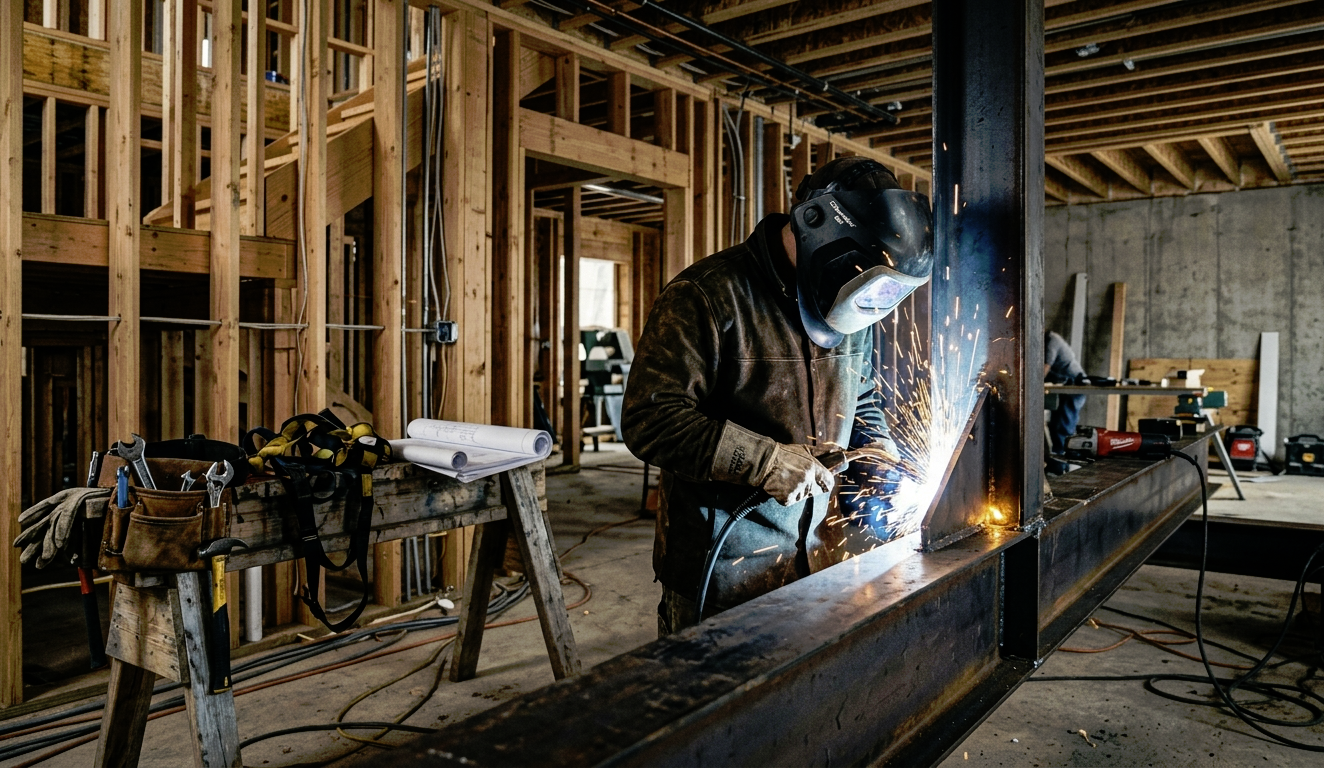
The reliability of these structures often rests on the shoulders of skilled welders who ensure that load-bearing beams and custom steel fixtures are fused without internal defects. It is estimated that there are 45,600 vacancies currently challenging the industry, making the presence of a certified professional more valuable than ever.
When a welder joins a project, they aren’t just melting metal. They are managing thermal expansion and structural tension to prevent future collapses or settling issues.
Homeowners who prioritize cheap labor over certified expertise often face astronomical repair costs when joints fail under environmental stress. Selecting a contractor who vets their subcontractors for specific certifications is the only way to guarantee that the “bones” of the home are actually built to last.
Precision Engineering in Modern Utilities
The utility systems within a home, including plumbing, electrical, and HVAC, function as the property’s central nervous system. Modern smart homes require a level of technical literacy that traditional handymen simply do not possess. As electrical grids become more complex with the integration of EV chargers and solar arrays, the margin for error has narrowed significantly.
Expertise in these fields is rare, which is reflected in the current labor market. Recent data shows that electricians and welders are leading the way in trade earnings due to the specialized knowledge required for these high-stakes installs. A mistake in a wiring diagram or a poorly soldered copper pipe can lead to catastrophic water damage or fire hazards that insurance may not cover if the work wasn’t performed by a licensed pro.
Training for these roles has become more rigorous to keep pace with building codes. Specialized hands-on training for aspiring welders provides the technical foundation needed to master various alloys and positions encountered in custom home renovations, for example. This level of preparation ensures that when a technician arrives at a job site, they are solving problems rather than creating them.
Successful project management relies on three specific pillars of trade coordination:
- Verified safety certifications for every high-voltage or structural task
- Real-time communication between the framing crew and utility installers
- Strict adherence to local municipal building codes and inspection schedules
The Aesthetic Finish of Master Carpentry
Once the structure is sound and the utilities are buried behind drywall, the finish carpenters and masons define the home’s personality. These trades require a different kind of precision; one focused on the visible details that define “craftsmanship.”
Finish carpentry involves more than just nailing baseboards. It is the art of handling wood movement, ensuring perfectly mitered corners, and creating seamless transitions between different materials.
A master carpenter understands how humidity in a new build will affect the cabinets six months after the project is completed. They anticipate these shifts during the installation phase to prevent warping or unsightly gaps.
The value of a home is often tied directly to the quality of these visible finishes. Prospective buyers can tell the difference between a mass-produced “flip” and a home touched by a seasoned professional. It is the difference between a house that looks good in photos and one that feels solid when you walk through the front door.
Building for Longevity in a Specialized Market
The modern homeowner must act more like a project manager than a passive observer. Understanding the specific roles of each trade allows you to ask the right questions during the bidding process. You shouldn’t just ask when the job will be done; you should ask who is performing the specialized labor and what their specific qualifications are for that task.
As the industry moves toward more sustainable, technologically integrated building practices, the gap between “general labor” and “skilled trade” will continue to widen. Investing in specialized expertise at the start of a project is the most effective way to avoid the “renovation nightmare” scenarios that dominate social media.
Our site has posts aplenty across a whole range of construction and DIY topics, so check them out whether you want to go pro or stay an informed amateur.
About The Author