
PlayStation players get the full Bedrock experience — and that means full access to the seed system. The right tool turns seed browsing from guesswork into a proper decision. The best Minecraft seed map tool reads Bedrock generation rules and shows PS5 players the exact world they’ll load: biomes, structures, spawn point, village locations, strongholds, Nether links, and everything in between.
Why PS5 Players Need a Seed Map
The best PS5 Minecraft seeds get shared constantly in communities and forums. But screenshots only show what the poster wanted you to see. A seed map shows you everything — including the parts the screenshot skipped. Maybe the biome variety looks great but the spawn drops you in the middle of an ocean. Maybe the village is 2000 blocks from the nearest forest. Maybe there’s a ruined portal nearby but no early iron or coal, turning the first night into a scramble.
The Minecraft Wiki confirms that Bedrock’s world generation is deterministic: same seed, same world, every time, across all Bedrock platforms including PS5. That determinism is exactly what makes a viewer useful. What the map shows you is what you’ll actually play.
How to Read a Bedrock Seed Map on PS5
- Survey biome spread: Within the first 500–1000 blocks, aim for several distinct biomes instead of one that dominates. This boosts recipe options, mob variety, and building palettes.
- Evaluate buildable terrain: Identify flat areas for bases that sit next to dramatic features like mountains or coastlines, so you get convenience without sacrificing vistas.
- Plan early progression: If you want a quick Nether entry, mark surface lava pools, ruined portals, and likely fortress directions so you can navigate immediately after generating the Nether.
What Makes a Seed Work Well on PS5
The best Minecraft seeds PS5 players keep returning to share a few traits:
- Balanced spawn — food, wood, and shelter materials within easy reach.
- Mixed biome access — no single biome dominating the early game.
- At least one structure visible or findable within the first session.
- Good cave access without requiring deep exploration early.
- Flat zones for base building near varied terrain.
PS5 runs Bedrock smoothly. The seed is the variable. A map tool makes that variable a choice instead of a gamble.
A 15-Minute “Quick Start” Checklist
Pretend you’ve only got fifteen minutes: spot a tree right at spawn, nab food in 2–3 minutes, sniff out surface coal or whip up charcoal with a straightforward hop to early iron, claim a flat pad by water or a nice ridge for the first base, and step into a second biome after a short stroll. If three or more of those boxes don’t tick, brace for a sloggy opener no matter how gorgeous the screenshots look.
Solo vs Co-op Considerations
- Solo: Prioritize compact resource density and predictable routes. One good village and a couple of caves near spawn beat scattered “cool” features.
- Co-op and cross-play: With players joining from PS5, mobile, Switch, and Xbox, you’ll want multiple points of interest radiating from spawn so everyone can peel off in different directions. A seed map also reveals natural choke points — peninsulas or narrow passes — that can cluster players and slow progress.
Common Mistakes When Picking Seeds
- Chasing rare biomes at spawn but starving basic materials (e.g., mushroom island with minimal wood).
- Judging only surface structures while ignoring underground density — iron and coal scarcity slows progression.
- Underestimating terrain mobility: dramatic cliffs and fjords look great but can trap early movement without tools.
- Forgetting Nether alignment: Overworld points of interest that don’t translate to practical Nether routes can hamper midgame travel.
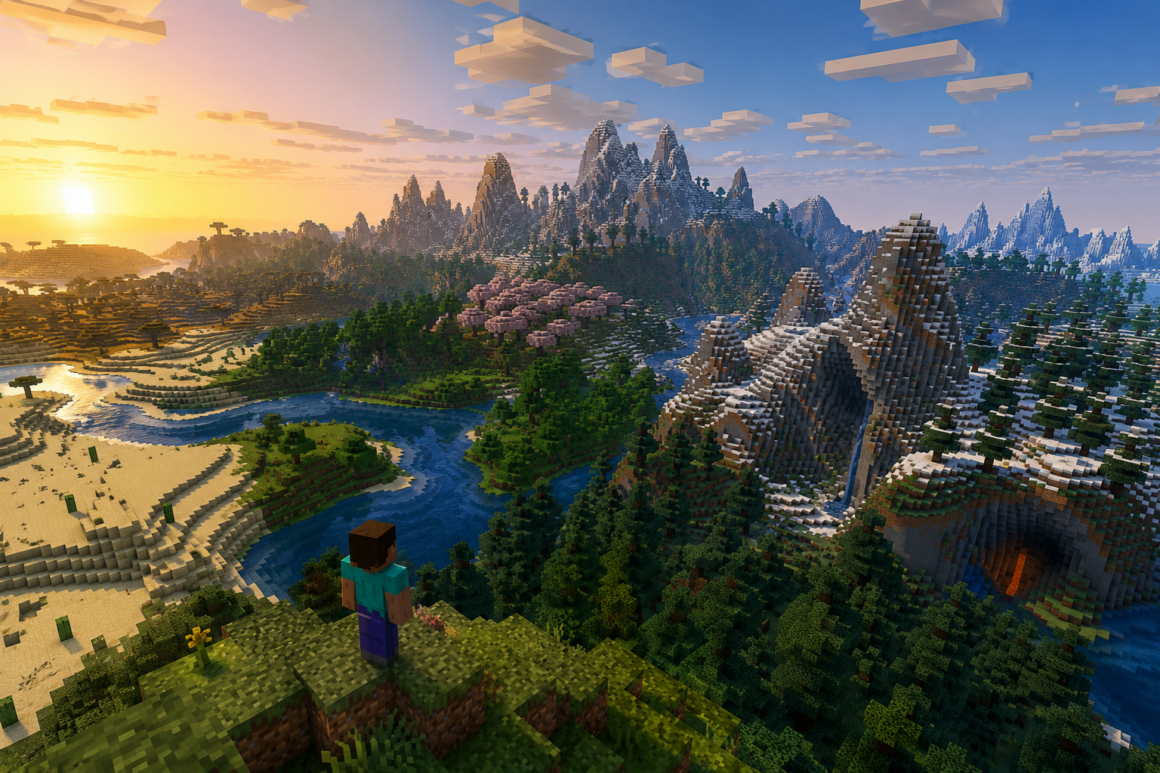 chatgpt.com
Best Minecraft PS5 Seeds Communities Are Sharing Right Now
The best Minecraft PS5 seeds shared in communities tend to cluster around the same qualities. Cross-biome spawns. Early village access. Ruined portals near spawn for players who want fast Nether progression. Checking these with a map before loading saves frustration. A seed that “looks good in screenshots” can still have an awkward spawn or major resources placed far away from where you’ll want to build. Speedrunner and content creator Dream has described seed selection as “one of the most underrated skills in competitive Minecraft.” The same logic applies to casual play — good prep leads to better sessions.
Hosting Matters When You Share a PS5 World
Cross-play between PS5 and other Bedrock platforms is active. That means your world might have players joining from mobile, Switch, or Xbox as well. More concurrent players means more chunk loading demand. A seed with great biome variety spreads players out — which is good for gameplay and harder on underpowered servers.
Pick the seed carefully with the map tool. Then make sure your server is built for the load that good world will create.
How to Choose a Seed Map Tool in 2026
- Bedrock-accurate rendering: It must target current Bedrock/PS5 generation, not Java approximations.
- Full-layer insights: Overworld, Nether, and End previews; structure dots; biome overlays; height and cave hints where available.
- Coordinate fidelity: Consistent XYZ readouts and easy waypoint export so you can copy to in-game maps or notes.
- Update cadence: Bedrock worldgen can shift with major updates; the tool should track patches promptly.
- Performance and UX: Fast pan/zoom, seed bookmarking, and mobile-friendly views for quick checks while you’re on the console.
- Share-friendly: Linkable views or snapshot exports so your group can align routes before joining.
Practical Workflow for PS5 Players
- Shortlist seeds from community posts. 2) Paste each into the seed map tool and record the spawn, nearest village, portal, and second biome. 3) Eliminate seeds with ocean/island spawns unless that’s your goal. 4) For the finalists, map a first 30-minute route (wood → stone → food → iron → shelter). 5) Start your world, follow the plan, and adjust using the coordinates you saved.
 chatgpt.com
With the right seed map tool and a quick evaluation routine, PS5 Bedrock players turn randomness into strategy — and every new world starts strong.
About The Author