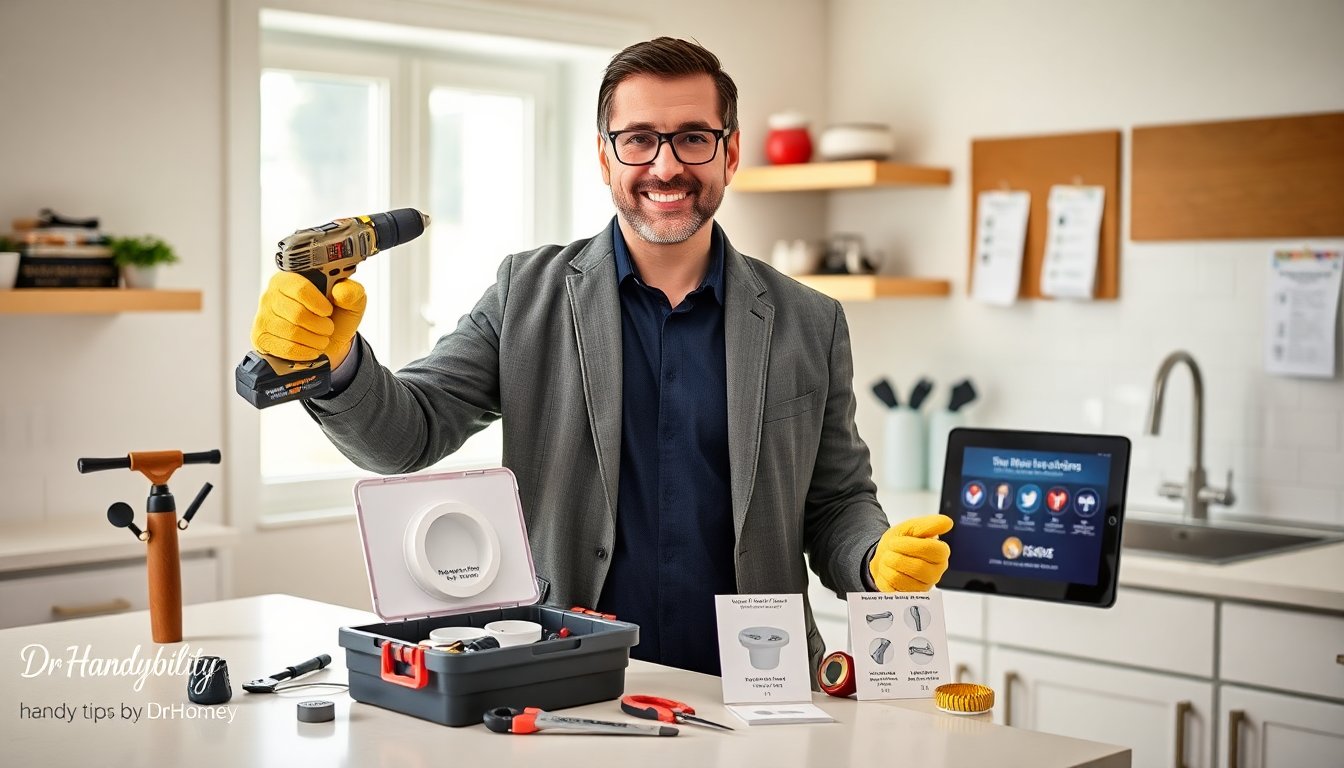
Drhandybility handy tips by drhomey show seven smart home fixes readers can use to save time and money. DrHomey lists clear steps and quick methods. The guide focuses on safe action and common tools. Each tip uses simple materials and short time. Readers can apply the tips the same day.
Key Takeaways
- Drhandybility handy tips by DrHomey provide simple, safe home repairs you can complete in under 30 minutes to save time and money.
- A compact toolbox with essential tools like a claw hammer, adjustable wrench, and cordless drill helps homeowners handle most fixes efficiently.
- DrHomey emphasizes safety first: always use protective gear, test electrical power before work, and keep a clean, hazard-free workspace.
- Follow DrHomey’s seasonal maintenance checklist to prevent costly repairs by inspecting roofs, gutters, HVAC, and insulation regularly.
- Know when to call a professional: for main electrical, gas, structural issues, or when the repair exceeds your skills, time, or safety comfort.
- Applying Drhandybility handy tips by DrHomey empowers homeowners to perform quick fixes like replacing a toilet flapper or installing weatherstripping confidently and effectively.
Five Quick Repairs You Can Do In Under 30 Minutes
DrHomey recommends five quick repairs that save cash and avoid long waits. First, he fixes a running toilet by replacing the flapper. He shuts the water, removes the old flapper, installs a new flapper, and tests the flush. Second, he clears a slow drain with a hand auger. He removes the stopper, feeds the auger, pulls debris, and runs hot water. Third, he tightens loose cabinet hinges with a screwdriver and a short wood screw when the hole strips. He fills gaps with a toothpick and wood glue if needed. Fourth, he replaces light bulbs with the correct wattage and checks the fixture for a loose connection. He turns power off first. Fifth, he installs weatherstripping on doors to stop drafts. He cleans the frame, cuts the strip to length, peels backing, and presses it in place. Each repair uses common tools and finishes in under thirty minutes.
Essential Tools Every Homeowner Should Own (And How To Use Them)
DrHomey lists a compact toolbox every homeowner needs. He includes a claw hammer, adjustable wrench, set of screwdrivers, cordless drill, tape measure, utility knife, level, and pliers. He also adds a basic socket set and a hand auger. He stores the tools in an easy-access case. He teaches safe use for each tool. He says the claw hammer nails and removes nails. He says the adjustable wrench fits many nut sizes. He says screwdrivers tighten and loosen screws and the drill speeds work and drives screws. He says the tape measure checks dimensions and the level ensures straight lines. He says the utility knife scores drywall and cuts caulk. He says pliers grip and bend metal. He recommends regular tool inspection and keeping sharp blades away from children. He suggests buying mid-range tools that last and offer warranty.
Simple Electrical And Plumbing Fixes That Don’t Require A Pro
DrHomey shares safe electrical and plumbing fixes that most homeowners can handle. For electrical fixes, he replaces switches and outlets when the breaker is off and the tester shows no power. He tightens loose wire connections and replaces worn outlet covers. He replaces burned-out fixtures and swaps bulbs for energy-efficient LED units. For plumbing fixes, he replaces a leaky faucet cartridge, tightens supply line nuts, and swaps a shower head to improve flow. He clears P-trap clogs under sinks by placing a bucket, loosening the trap, and removing debris. He fixes a slow toilet by adjusting the fill valve and replacing a flapper. He advises turning off water or power before work and testing after repairs.
Safety First: Personal Protective Gear And Safe Work Habits
DrHomey stresses safety gear and simple habits. He recommends safety glasses for any flying debris and gloves for grip and cut protection. He tells readers to use a non-contact voltage tester before touching electrical parts. He asks readers to set a clean workspace and remove tripping hazards. He recommends a sturdy ladder when needed and a second person to steady the ladder. He says to read product instructions and to follow local codes for wiring and plumbing. He advises stopping and calling a pro if the fix requires altering main wiring, gas lines, or structural elements.
Seasonal Maintenance Checklist To Prevent Costly Repairs
DrHomey offers a short seasonal checklist that reduces long-term costs. In spring, he inspects roof shingles, cleans gutters, and checks window seals. In summer, he services the air conditioner and trims trees away from the house. In fall, he inspects the heating system, replaces filters, and clears gutters again. In winter, he insulates exposed pipes, checks weatherstripping, and monitors for ice dams. He writes each task as a short action and recommends a calendar reminder. He says small checks prevent large failures and cut emergency repair bills. He suggests keeping a simple log of dates and results to track recurring issues.
How To Know When To Call A Professional, Cost, Time, And Risk Signals
DrHomey outlines clear signals to hire a pro. He says to call a professional when the repair involves main electrical panels, gas lines, structural supports, or sewer lines. He says to call when a fix takes more time than the homeowner can spare or when a fix carries high safety risk. He lists cost signals: if parts cost more than the homeowner values their time, hire help. He lists risk signals: if the homeowner feels unsure about tools, or if permits are required, hire a licensed pro. He adds that a pro can provide warranty and liability protection. He recommends getting two estimates and checking reviews before hiring.
About The Author