Sooner or later the roof gives up, and you’re standing in the driveway squinting at it, wallet already bracing. The choice almost always narrows to two camps. Familiar asphalt shingles, the stuff on most of the street. Or metal, the option your neighbor won’t shut up about since he put his on.
Both can be a smart buy. Both can also turn into a headache when the wrong people install them, and metal is fussier that way — its long life only shows up when the panels go on clean, which is why folks lean on specialist metal roof contractors rather than a general crew that dabbles. So this isn’t really asphalt versus metal in a vacuum. It’s asphalt versus metal, done right, for your house, your climate, your budget.
The short answer, before we get into it
Asphalt wins the day you pay. Metal wins the decade after.
If cash up front is the whole story, shingles are cheaper and that’s that. If you plan to stay put and hate the idea of re-roofing again in fifteen years, metal usually comes out ahead once you stretch the math across its lifespan. Neither is “better” flat out. They just solve different problems, and the rest of this breaks down which problem is actually yours.
Cost — what you pay now versus what you pay over time
Money drives most of these decisions, so start here.
Day one
Asphalt is the budget champ, no contest. Materials are cheap, crews everywhere know the work, and a straightforward shingle job can run two to three times less than metal on the same roof. For a homeowner who needs a sound roof this month without draining savings, that gap is the entire argument. It’s real and it’s fair.
Metal asks for more upfront. The material costs more per square, the labor is skilled, and a proper install eats more days. You feel it when the quote lands.
Cost per year of roof you own
Here’s the number people skip. Take the price, divide by the years the roof will actually last. Suddenly the picture flips.
An asphalt roof at, say, a lower price but a 17-year life carries a certain cost per year. A metal roof costs more going in — spread across 50 years, though, that yearly figure often drops below the shingle. You buy metal once. Asphalt you might buy two or three times over the same stretch, paying for tear-off and disposal each round. Folks who crunch it that way tend to stop seeing metal as the expensive option and start seeing it as the patient one.
Lifespan and how each ages
This is the widest gap between the two, and it’s not close.
Quality asphalt shingles give you 15 to 20 years, sometimes a touch more in a mild climate with good attic ventilation. Metal runs 40 to 70, and premium copper or zinc can outlive the mortgage twice.
How they get old matters as much as how long. Asphalt goes visibly: tabs curl at the edges, granules wash into the gutters and leave bald dark patches, the whole surface starts looking tired a few years before it truly fails. Metal mostly just sits there. A coated steel panel looks about the same at year twenty as it did at year two. No slow crumble, no annual decline you watch from the yard.
Weather — which one survives what
Your local sky should weigh heavily here, maybe more than price.
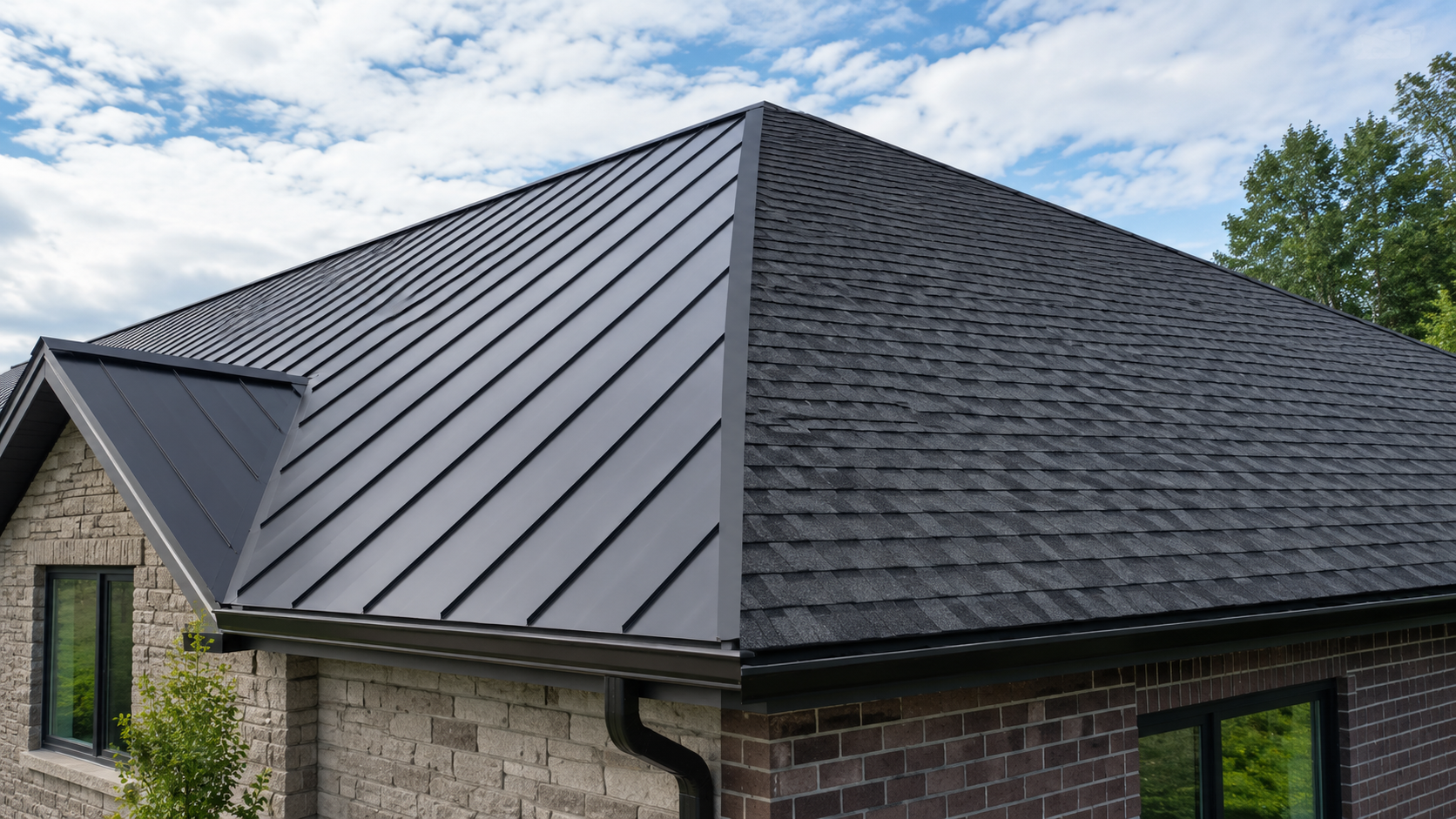
Wind is a metal strong suit. A locked standing-seam roof shrugs off gusts that strip asphalt shingles off in ragged rows and dump them across the lawn. Snow and ice? Metal sheds it — the slick surface won’t let snow pack down into the ice dams that pry shingles loose and force water under them. Add snow guards over the front door so a slab doesn’t slide onto a visitor, and you’re set.
Hail is the honest ding against metal. Big stones can leave cosmetic dents, more so on softer aluminum than on steel. Metal almost never punctures the way an aging shingle cracks, but if you live under regular hailstorms and hate the thought of dimples, that’s a genuine mark against it. Asphalt takes hail damage too, just differently — bruising and lost granules that quietly shorten its life.
Fire goes to metal, flatly. It won’t ignite, which counts for a lot in wildfire country and sometimes nudges your insurance down. Salt air near the coast is where you skip bare steel and talk aluminum, since the corrosion risk there is no joke.
Energy and everyday comfort
Summer separates these two in a way the brochure photos never show.
Dark asphalt drinks heat all afternoon and radiates it straight down into the attic, so your AC grinds through July fighting a roof that’s basically a griddle. Metal reflects a big share of that solar load instead of soaking it up. Pair a lighter finish with decent attic insulation and the cooling bill drops enough that people actually notice on the first hot-month statement.
Then the tired old worry: won’t metal be loud when it rains? That myth comes from bare barns with no attic underneath. On a real house — solid decking, underlayment, insulation stacked below — a metal roof sounds about like any other. A few owners even claim theirs is quieter than the shingles they tore off.
Looks and resale
Style used to favor asphalt by default. Not anymore.
Shingles come in every color and a couple of textures, they suit most traditional homes, and nobody blinks at them. Safe, tidy, expected. Metal has stretched way past the corrugated-barn image — standing seam reads clean and modern, and metal shingles can mimic slate or wood shake close enough to fool you from the curb.
Buyers price it in. A metal roof shows up on a listing as one giant worry crossed off, a thing the next owner won’t touch for decades, and appraisers give weight to that. Fresh asphalt helps a sale too, sure, just without the “never think about it again” bump.
Repairs and upkeep down the road
No roof is truly zero-maintenance, whatever the salesman says.
Asphalt is easy and cheap to patch. A few shingles blow off in a storm, most any roofer can swap them next week for pocket change, and matching color on a newer roof is simple. The flip side is you’ll be doing it more often as the thing ages and gets brittle.
Metal needs attention far less, but when it does, the fix is more specialized. Exposed-fastener panels have screws with rubber washers that dry and shrink over the years, so somebody walks the roof eventually to re-torque or replace them before slow drips start. Flashing around a chimney or valley wants a hand that knows metal. Rarer trouble, pricier per visit — a trade most owners happily take.
So which one fits your situation
Forget “best.” Think about you.
Grab asphalt if the budget is tight right now and the upfront number is what keeps you up at night. Grab it if you’re not sure you’ll still own the place in ten years, since you won’t be around to collect on that 50-year payoff. Grab it if your area gets brutal hail every spring and cosmetic dents would drive you up the wall.
Reach for metal if you’re planting roots and want to pay for a roof exactly once. Reach for it if your summers are punishing and the cooling bills already sting, or if wind, wildfire, or heavy snow rule your weather. Coastal spot with salt in the air? Aluminum metal, and don’t overthink it.
About The Author