When it comes to securing a family property, modern homeowners look far beyond mere aesthetics. For households with pets, particularly dogs, the garden boundary is a critical safety infrastructure. Traditional timber fencing has long been the default choice across the UK, but a growing micro-demographic of analytical buyers is identifying significant flaws in its long-term performance and safety metrics.
The shift toward premium synthetic alternatives is being driven by a need to mitigate specific veterinary and structural risks. From toxic chemical treatments to structural failure caused by clawing, traditional wood presents ongoing liabilities. For analytical pet owners, switching to engineered composite panels is a calculated decision to optimize safety, durability, and perimeter security.
Structural Pet Safety: Engineering Out the Risks of Timber
To understand why composite materials are displacing timber in pet-centric landscaping, one must analyze the physical interaction between an animal and the boundary wall. Dogs, driven by territorial instincts and external stimuli, interact with fences through scratching, leaping, and biting, behaviors that rapidly degrade natural wood.
● The Zero-Splinter Metric: Timber panels, particularly budget-friendly pressure-treated softwoods, are highly prone to checking and splitting when exposed to the UK’s freeze-thaw cycles. As the wood fibres separate, they form sharp shards. Dogs running along the perimeter or pawing at the base face a high risk of paw pad lacerations and subcutaneous splinters, which frequently require veterinary intervention under sedation. Composite panels feature a homogenous extrusion of recycled plastic and wood flour, ensuring a completely smooth surface that cannot splinter, regardless of weather exposure.
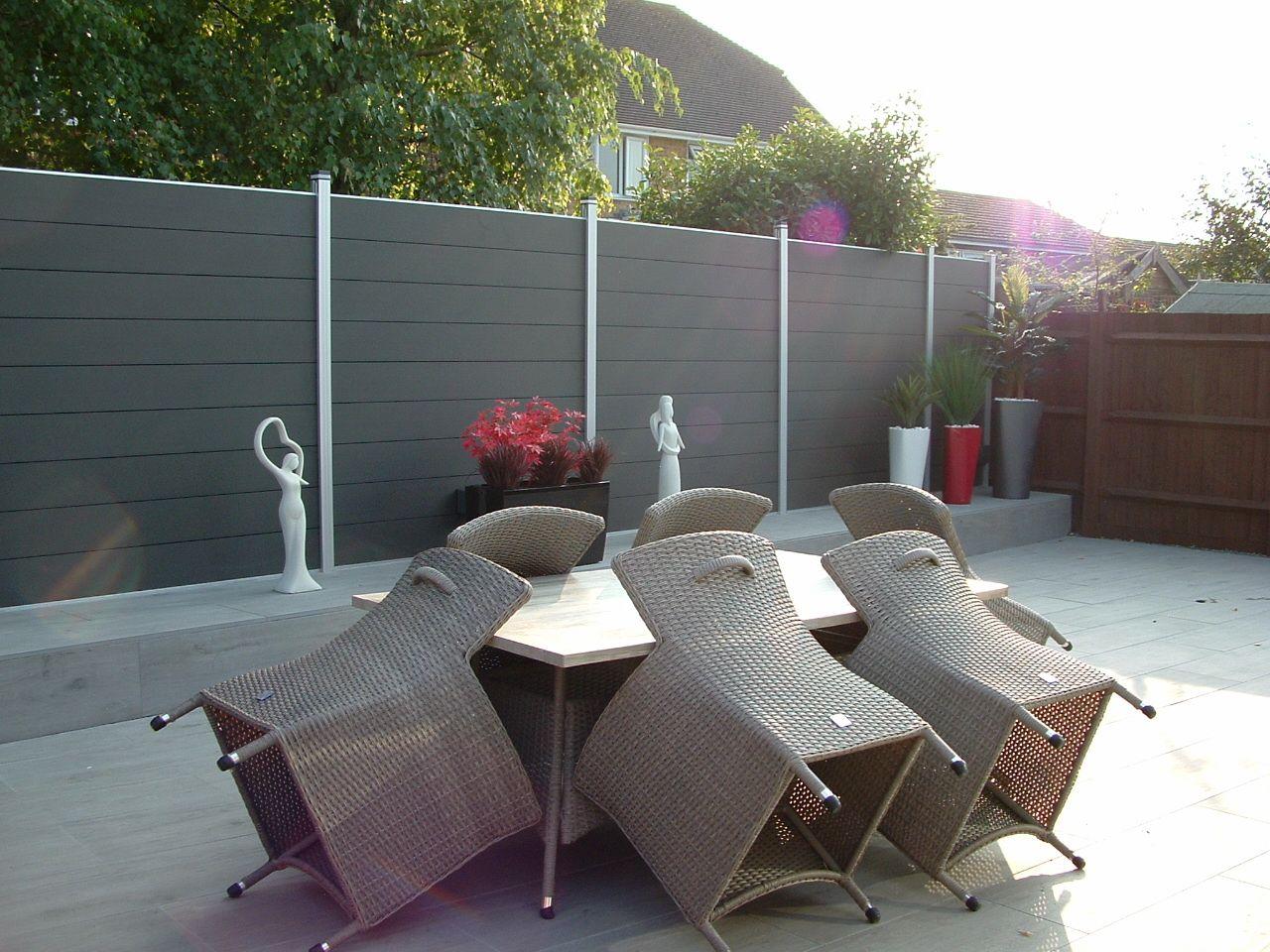
● Elimination of Horizontal Footholds: Standard UK fencing, such as closeboard or palisade, relies on exposed horizontal structural rails on the internal side. For medium-to-large breeds, these rails act as natural ladders, providing the necessary foothold to scale a standard 6ft boundary. High-quality composite fencing systems utilize a tongue-and-groove interlocking mechanism that slides into flush side posts. This creates a completely flat, vertical surface with zero horizontal ledges, mathematically reducing a dog’s vertical climbing capability.
● Anti-Claw Surface Density: A determined dog can claw through a standard 8mm thick timber larch lap panel in a matter of minutes. Premium composite fencing boards are engineered with a dense core and a hardened outer cap layer, typically yielding a Brinell hardness rating significantly higher than softwoods. This material density resists sustained scratching, preventing animals from creating sightlines or escape holes at the base of the perimeter.
● Chemical Non-Toxicity: Traditional timber requires chemical pressure treatments (historically copper chrome arsenic, and currently copper azole or quaternary ammonium compounds) to delay fungal decay. Chewing behavior in dogs—often triggered by anxiety or boredom—can lead to the ingestion of these treated wood fibres. Composite fencing is chemically inert, manufactured without heavy metals or volatile organic compounds (VOCs), ensuring that even if a pet mouths the surface, there is zero risk of chemical toxicity.
Timber vs. Composite Fencing
For modern buyers, evaluating a property upgrade requires comparing hard performance metrics. The table below outlines the physical properties and long-term behavior of standard pressure-treated timber versus premium capped composite fencing under typical UK environmental stressors.
|
Performance Metric |
Pressure-Treated Timber Fencing |
Premium Capped Composite Fencing |
|
Moisture Absorption Rate |
25% – 30% |
Less than 1.2% |
|
Splintering & Cracking Risk |
High (increases with age) |
Zero |
|
Tensile Strength (Impact Resistance) |
Low to Medium (biodegradation weakens it) |
High (engineered polymer core) |
|
Chemical Additives |
Biocides, Fungicides, Copper Compounds |
None (Chemically inert polymers) |
|
Lifespan Under High Pet Activity |
5 – 7 Years |
20+ Years |
|
Annual Maintenance Hours |
8 – 12 hours (sanding, staining) |
0 hours (wipe clean only) |
Layout Planning for High-Anxiety Pets
Pet owners recognize that perimeter security is as much about psychological containment as it is about physical barriers. Dogs are frequently triggered by “visual reactivity”, barking and pacing when they glimpse pedestrians, vehicles, or other animals through gaps in fencing boards.
Traditional timber panels warp and shrink as their moisture content fluctuates between the wet winter months and drier summer spells. A standard 100mm timber board can shrink by up to 5% in width during a dry spell, creating vertical gaps between the slats. These gaps provide sightlines that elevate a dog’s cortisol levels and trigger fence-line aggression.
Because composite boards absorb virtually no moisture, their dimensional stability is exceptional, maintaining a permanent, opaque seal. For highly reactive breeds, establishing a total visual blackout zone using flush composite panels successfully dampens the environmental triggers that cause compulsive pacing and digging.
Additionally, when engineering a pet-safe garden layout, the transition between horizontal and vertical surfaces must be seamless. Integrating a secure composite boundary with a high-performance patio or raised deck area ensures that the entire perimeter is free from exposed nails or rotted timber joists. Utilizing specialized durable decking boards alongside your composite fencing creates an ultra-tough, claw-proof ground plane that prevents dogs from digging outward underneath the fence line—a common escape route for terrier and working breeds.
Long-Term Return on Investment
From a capital expenditure perspective, the data clearly favors a high-performance boundary for pet-owning households. While the upfront material cost of a composite system exceeds that of standard timber by approximately 60% to 80%, the lifecycle cost tells a completely different story.
When you factor in the compounding costs of annual pet-safe wood preservatives, the inevitable replacement of claw-damaged panels, and potential veterinary bills arising from splinter injuries or toxic wood ingestion, a composite perimeter achieves financial parity within just five years. For the analytical buyer, choosing composite is an investment in structural longevity, property valuation, and, above all, definitive peace of mind regarding family pet security.
About The Author