Key takeaways
- Good lighting in your plant will protect people, improve quality, and promote consistent productivity with each and every shift.
- Modern lighting and controls often reduce energy cost by 30-60% with no loss of output or comfort.
- A basic inspection and maintenance program ensures light levels are maintained and key lines do not fail unexpectedly.
- Most well planned upgrades pay back in 2-5 years especially if you stack rebates and incentives.
Why Lighting Management is Important at Large Manufacturing Plants
When I walk into a plant I can usually tell in 10 seconds whether lighting gets attention.
You see it in how operators lean in to read gauges or how forklift drivers drive slower in darker corners. Poor lighting is often reflected in the fact that small mistakes are often noticed first. Misread labels. Missed defects. People move cautiously.

OSHA and NIOSH both cite adequate lighting as an essential element of safety control. In one automotive plant I worked with, a change in task lighting at assembly stations reduced the number of hand injuries that could be recorded by approximately 20% in a year. Same people, same equipment, different visibility.
OSHA’s workplace illumination standards reinforce that adequate lighting in work areas, aisles, and exits is a fundamental requirement for reducing slip, trip, and fall hazards in industrial facilities.
The Occupational Safety and Health Administration’s guidance on lighting in the workplace points out that proper lighting is a basic control to prevent slips, trips, falls and other common industrial injuries. Referencing OSHA’s dedicated lighting page when you review your plant standards helps ensure that your internal practices are in line with federally recognized expectations for safe visibility in manufacturing environments.
Lighting also has an impact on fatigue. If your team works on 10 or 12 hour shifts, if there is uneven, low light, they wear people down. That usually means working slower with more re-work.
So when you manage lighting like any other critical system, you protect people and guarantee throughput at the same time.
Important Lighting Standards and Requirements of Manufacturing Plants
You do not need to memorize every single standard but you should know that the big ones exist.
The Illuminating Engineering society has recommended light levels for various tasks that are published. For instance, general manufacturing may be in the 300-500 lux range whereas detailed inspection may go up to 750 lux or more. OSHA is more concerned with safety and with egress but inspectors expect reasonable sight visibility in work areas.
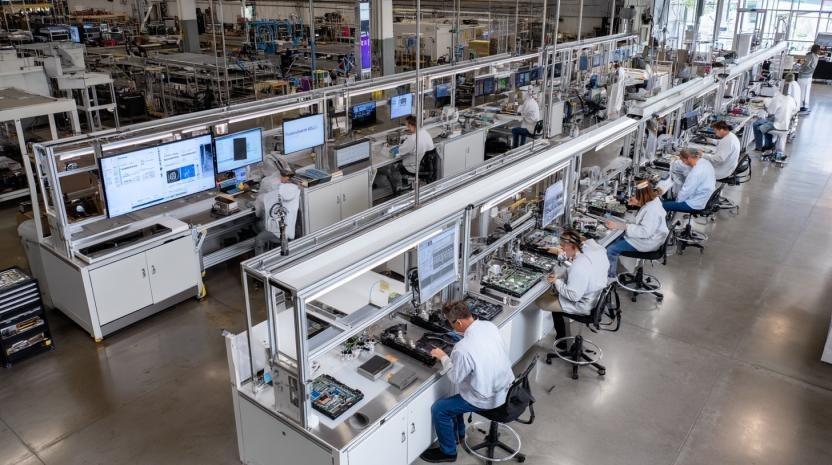
I usually recommend a quick table while planning, production, inspection, loading, offices, each with target light levels and sample tasks. That simple chart keeps everyone honest if someone decides to save money by dropping fixture counts.
Think male your safety critical areas. Machine guarding, stairs, mezzanine and exits are of particular note. If someone on your team has ever said something like “that corner feels dark” consider that a piece of data.
Local codes and fire marshals are also interested in emergency lighting and exit paths, so engage your electrical contractor in those discussions early on.
Understanding Your Existing Lighting System
Before you purchase one led light you need to know what you have today.
A simple lighting audit is not complicated. Take a walk of the plant using a simple map. Mark each and every light fixture, note the type of light, wattage, height mounted and condition. Use an app on your mobile phone to spot check light levels at the floor and work surfaces. It is not perfection, but it’s an improvement on guessing.
In one such metal shop that I visited, the audit revealed some aisles to be at 150 lux, and some at over 800. There were complaints from operators about glare in one area and dark racks in another. Nobody was ever able to put the whole picture on one page.
From there, benchmark your total lighting energy consumption and calls for maintenance. That becomes your baseline. When you upgrade, you can refer to values in real numbers rather than “it feels brighter.”
Ask your team what their problems are in terms of seeing clearly. Their answers are normally the same as the meter.
Choosing the Right Lighting Technologies for Manufacturing Plants
Most large plants now are moving toward LED as the default lighting solution, and I think that makes sense. Compared to metal halide or fluorescent lighting, LEDs typically reduce wattage usage by 40-60% and increase the lifespan of lighting by a huge margin.
According to the U.S. Department of Energy, properly selected commercial and industrial LED luminaires deliver substantial energy savings and longer service life compared to legacy lighting systems, especially in high bay manufacturing environments.
I worked on a facility that changed 400W metal halide high bays for 160W LED high bays. Same mounting height, improved lighting, approx. half the energy consumption. Maintenance loved it because they did not have to rent lifts every few months.
For tall spaces, choose high bay fixtures with the appropriate optics and spacing. For low ceilings, low bays prevent glare. Add task lighting at inspection benches or control panels so that you do not overlight the entire room.
Look out for color temperature and CRI. Neutral to cool white with good color rendering to allow people to see defects and wiring clearly. In areas of hazardous or high heat, you may need specialty or explosion rated fixtures so bring in an industrial lighting specialists.
Lighting Controls and Strategies to Automate
Lighting controls are the hiding place of a lot of energy savings.
Start by zoning your plant. Group fixtures for production line, aisle, storage, and support spaces. That way you can dim or turn off areas when the ones idle without having to interfere with active areas.
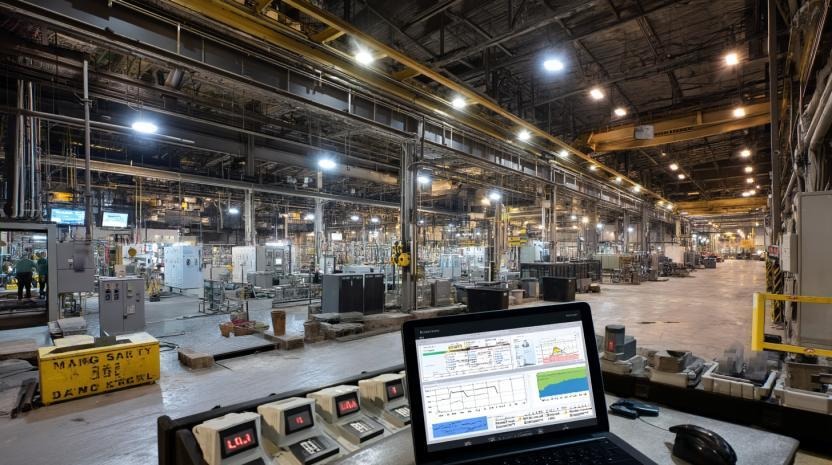
Occupancy sensors are well suited in storage rooms, areas with little movement and some warehouse aisles. I saw one project where the addition of sensors in the secondary areas was reducing lighting energy use there by 40% or so. People were surprised how frequently those spaces were vacant.
Daylight harvesting is useful in the vicinity of windows or skylights. Sensors dim artificially used lights when the sun does the job. It’s simple, yet it reduces energy quietly and unobtrusively.
Larger plants will often tie lighting into a center system so that the schedules are based on shift patterns. Start up early before the first shift, dip back during the weekends and account for overtime. The goal is simple enough, lights on when needed, off or low when not.
Designing Lighting Plans for Large Manufacturing Spaces
Good lighting design begins with the ceiling and the obstacles between lighting fixtures and work.
List ceiling heights, crane paths, ductwork and high equipment. These all have an impact on the spreading of light. At one fabricating establishment, a new overhead conveyor cast a shadow stripe across a primary aisle because no one revisited the layout.
However, aim for consistent light levels, not just bright spots. And even coverage along aisle and workstations allow operators to move safely and keep the results of inspections stable. Sometimes that involves more lower output fixtures rather than fewer ones that are very bright.
Glare is a common complaint. Shiny floors, polished machine covers and low mounted high output fixtures can cause one to squint or tilt screens. Diffusers, improved aiming or differing optics usually cure that.
Try to design keeping in mind changes in the future. Lines shift, racks change, and new machines are brought in. Modular layouts and plug in connections make those changes less painful.
Energy Efficient and Cost Management
When you talk to leadership, lighting is usually a conversation of budget first.
Break costs down into simple components, fixtures and installation costs, energy costs over time and maintenance. A cheap fixture that doesn’t last that long or wastes power isn’t cheap in the long run, 10 years.
In order to run a quick life cycle comparison, I often do. Old metal-halide/tired fluorescent vs. new energy-efficient lighting solutions with controls. In many plants, in fact, the upgrade will pay for itself in 2-4 years with the savings of lower energy costs and reduced lift rentals alone. That is not even including less quality issues.
Utility rebates and tax incentives can pay for a noticeable portion of project cost. One client was able to cover roughly 25% of upgrades through local programs.
Track Some KPIs, lighting kWh per square foot, lighting-related work orders and worker complaints. Those are numbers that can help you maximize energy and to fight future project defenses.
Maintenance and Continued Lighting Management
A lot of plants upgrade lighting, and then they forget about it until there is some issue with some failure over a key line.
Set a simple preventive plan. Inspect zones, on a schedule, clean lenses, check sensors, and confirm settings. Dust and oil film can cause the light to be quietly stolen over the long term. Regular cleaning extends the life of lighting, and helps keep light levels closer to design.
Where possible, standardize fixture types. Fewer models mean less spare parts and repairs are made faster. Keep important spares for safety exits, main aisles and bottleneck machines.
Document your lighting system. Keep drawings, fixture schedules and control zone maps in one location. When someone calls because of a dark area, maintenance should not require a scavenger hunt.
Train your team in simple controls and safe working at height Someone in the plant should “own” decisions about lighting (not just react to complaints).
Safety, Compliance and Risk Management
Lighting directly connects with your safety program, even if it does not come up too often on posters.
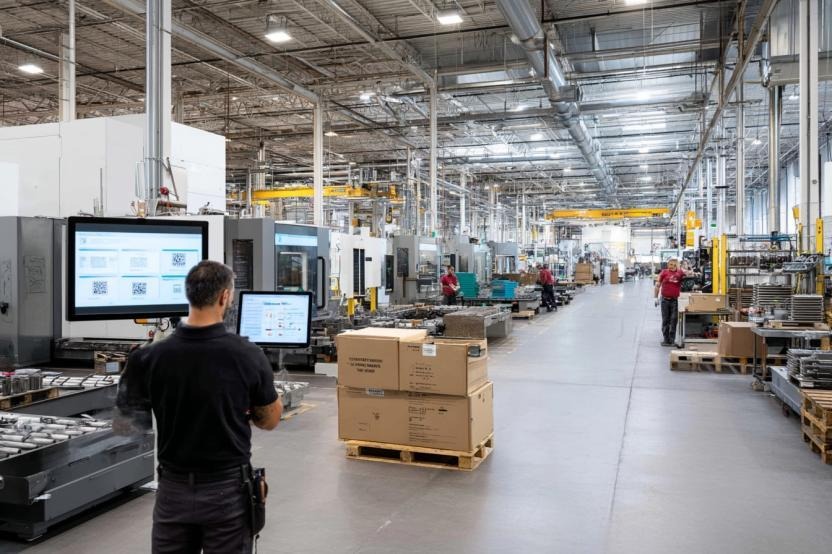
Emergency lighting and exit paths should also be a concern. Test them on a time frame and record the results. During one audit I sat in on found that the only significant finding was failed emergency fixtures in a back corridor nobody used on a daily basis. It still mattered.
Look at areas of higher risk, Confined spaces, chemical storage, loading docks and outdoor yards. Ask people if they can see trip hazards, labels and traffic clearly in any conditions. Night shift and bad weather often brings to light problems day shift misses.
When you review incidents/near misses, include one question, did lighting play any role? Over time, patterns appear. That evidence makes it easier to know how to justify upgrades as calculated risk reduction, rather than just “nice to have” improvements.
Case Studies: Real-World Lighting Improvements in Manufacturing Plants
Let me share here three quick examples that stuck with me.
A large assembly plant replaced around 600 Metal Halide High Bays with LED. Lighting energy saving was about 50%, payback of less than three years, and fewer picking errors on kitted parts were reported by the supervisors.
A food processing facility required sealed, cleanable fixtures. They migrated to smooth body LED units with more CRI. Inspectors began detecting problems with contamination earlier and comments from auditors concerning visibility improved. Maintenance also ceased fighting corroded housings.
On a multi building campus, leadership standardized the fixtures and controls on three plants. That move alone simplified training as well as spares parts. Combined energy savings from the new lighting solution and controls came in around 35%, leading to the CFO being much more receptive to future projects.
Working With Professionals on Big Plant Lighting Projects
You can do much internally, but there is some point where a specialist helps.
If you are adding a new line, expanding a building or getting constant complaints regarding visibility, bring in an industrial focused electrical contractor. Ask for photometric layouts, and clarity on energy savings estimates, and plan for working around live production.
I usually ask partners a few simple questions on the path of similar projects, and how they get around scheduling and how they support rebate paperwork. Their answers tell you if they understand an industrial environment or just small offices.
Plan installation in phases. Nights, weekends or 1 line per time. Semi-temporary lighting where required. The challenge is to enhance the lighting without destroying your production schedule.
Special Section: Optimizing Warehouse Lighting Within Your Plant
Storage areas tend to get ignored until someone has a near miss with a forklift.
Shadows are created by tall racks and long aisles, especially at upper levels. Good warehouse lighting focuses on vertical illumination so operators can read labels at height, not just see the floor. Aisle optics help to push light down the length of the rack faces.
In one distribution area I worked with, improving warehouse lighting and adding sensors in low traffic aisles cut energy use and reduced picking errors. Forklift drivers also reported being able to see better at intersections.
Tie these zones into your overall lighting plan to ensure that emergency routes are always clear and consistent.
Action Plan: Lighting and Enhancement of Your Manufacturing Plant
If you find yourself a little overwhelmed, start small and structured.
First thing to do is to walk your plant and do a basic audit. Note fixtures, light levels and obvious problem spots. Second, mark safety critical areas and ask operators where they have problems seeing. Third, set easy-to-achieve goals for safety, quality and energy efficiency.
From there, draw up a phased plan. Maybe perhaps start with one production line or one building bay as a pilot. Measure energy savings and feedback. Use that data to construct a business case for leadership that includes cost, payback and reduction of risk.
You don’t need perfect light everywhere on day one. You just need a comprehensive next step and you need a way to show it worked.
FAQs About Managing Lighting in Large Manufacturing Plants
How often should I review or update my plant lighting plan?
Most plants do well with a formal review every three to five years, or sooner after major layout changes, new lines, or recurring complaints from operators or safety teams.
What is a reasonable light level for general manufacturing areas?
Many general production spaces target roughly 300–500 lux at the work surface, with higher light levels for detailed assembly, inspection, or fine measurement tasks where small defects or markings matter.
How do I know if my plant is a good candidate for an LED retrofit?
If you still rely on metal halide or older fluorescent fixtures, see frequent failures, high energy bills, or uneven visibility, you are almost certainly a strong candidate for an upgrade.
Can I upgrade lighting without stopping production?
Yes, most projects phase work by area, line, or shift, using nights, weekends, and temporary fixtures so you maintain safe visibility while avoiding major downtime on critical equipment.
What is the first step if I have a limited budget?
Start with a low cost lighting audit and pick one high impact pilot area, such as a main line or busy storage zone, then use real results to justify the next phase.
About The Author